
Running Pace Calculator
Know any two of pace, time, or distance — we'll solve for the third value instantly.
Even pace holds the same target throughout.
Your pacing picture
| Distance | Split | Elapsed |
|---|
A pacing scenario, not a prediction of fitness. Terrain, weather and how you feel may call for a different plan.
Understanding Pace & Splits
Pace is time per kilometer or mile: 5:00/km is about 8:03/mile. A split is the time for one section; elapsed time is the total at that checkpoint. The chart above compares your first and second halves without changing your chosen finish time.
Gentle negative pacing assigns 51% of the time to the first half of the distance and 49% to the second. It is a planning option, not a recommendation for every course or runner.
Metric vs. Imperial Pacing
Most of the global running community tracks workouts in kilometers, while runners in the US and UK often think in miles. Quick pacing conversions: a 5K race is 3.11 miles, a 10K is 6.21 miles, a Half Marathon is 13.11 miles, and a full Marathon is 26.22 miles. Using standard pacing metrics helps maintain pacing group consistency during competitive events.
How do you calculate running pace?
Divide total time by distance. For example, 50 minutes over 10 kilometers is 5:00 per kilometer. Use the calculator to solve for any missing value, then compare likely race times with our race time predictor.
Pace vs. speed: what is the difference?
Pace is the time needed to cover one unit of distance, typically minutes per kilometer or mile. Speed is distance covered per unit of time, such as kilometers per hour. Runners often use pace because it makes target splits easy to follow. For easy days, many runners go by heart rate instead; our heart rate zone calculator gives you the five zones.
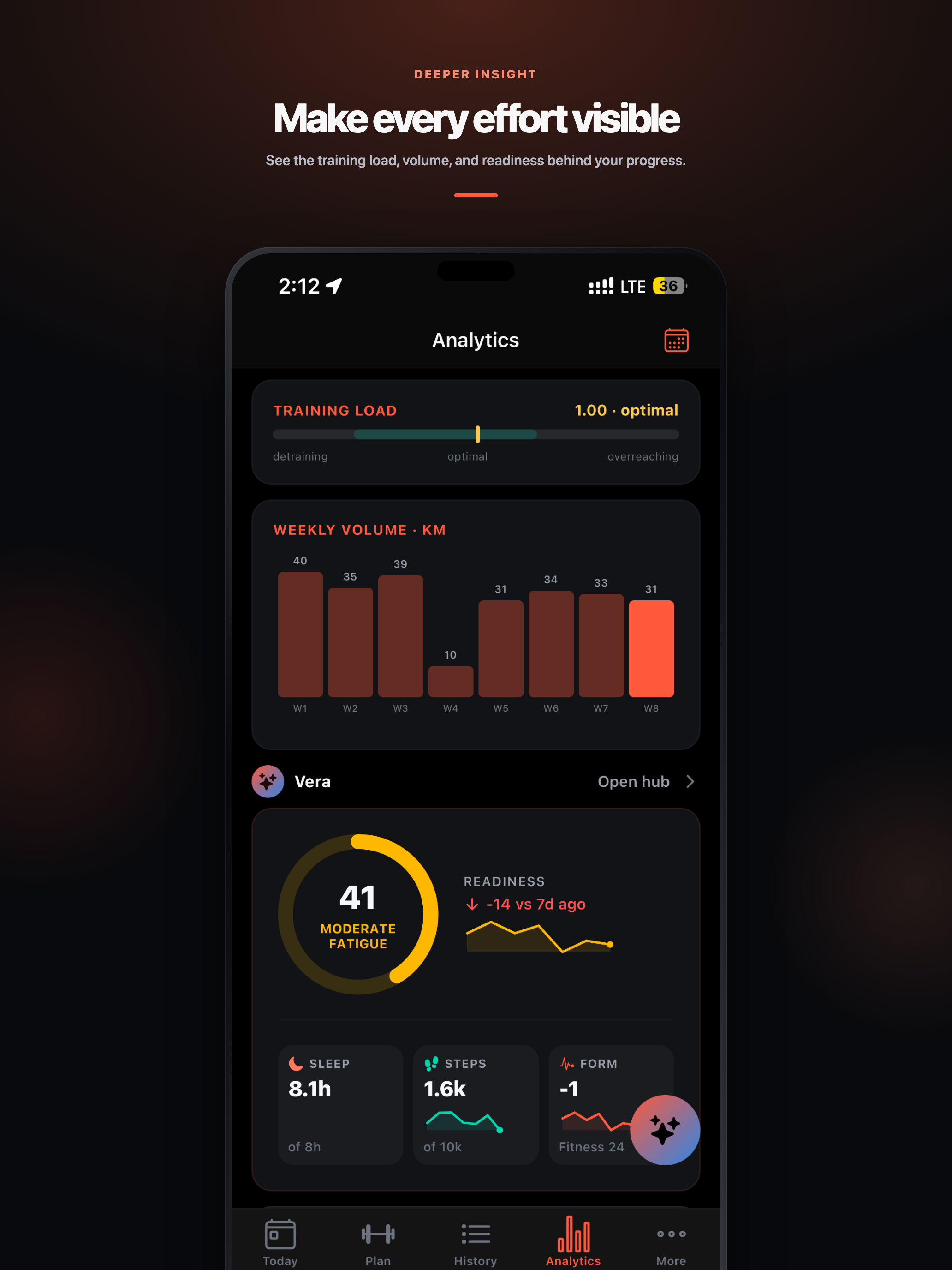
EverRun keeps pace in context with your recent effort, training load, and next planned session in one focused iPhone training home.
Get EverRun for iPhone →